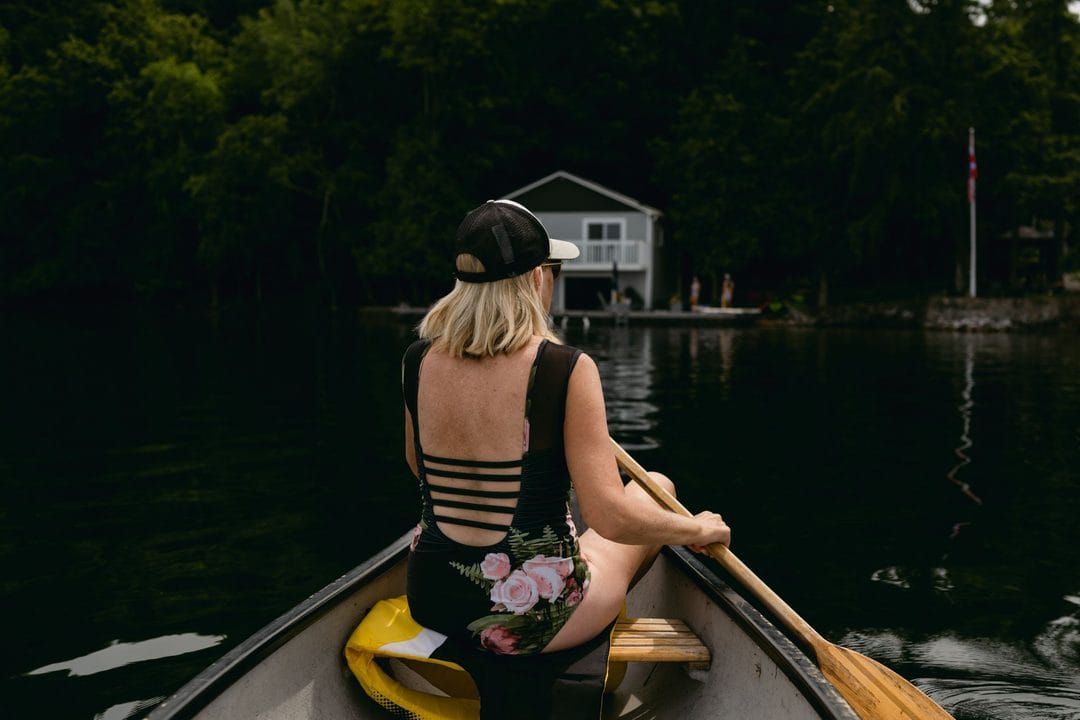
Marisol, 31, spent the last weekend of June at a rented cabin outside Asheville with six friends and didn't post a single photo. Not the hike, not the dinner table lit by three mismatched candles because the power flickered, not even the one moment she admits would have gotten real engagement — a black bear ambling across the driveway at dusk while everyone stood frozen on the porch. Her phone sat face-down on a kitchen counter for most of the trip, charging next to a bag of chips. When she got home, she didn't upload a recap. She didn't feel like she owed anyone one, either.
That instinct — to live a moment instead of narrating it — has a name now, and it's spreading faster than anyone in the wellness-industrial complex predicted. "Main character energy" ruled TikTok and Instagram captions from roughly 2021 through last summer: the idea that you were the protagonist of your own story, so you should film the walk, caption the coffee, soundtrack the breakup. It sold a lot of Stanley cups and a lot of ring lights. This July, the same platforms are full of a colder, quieter phrase: background character energy, or its slightly softer cousin, background character peace. The premise is almost embarrassingly simple. Some days you are just an extra in your own life, and that's the better version of the day.
What Main Character Energy Actually Cost
The main character era wasn't free, even when it looked like self-expression. It asked for a constant low hum of editorial judgment running under every experience — is this angle flattering, does this outfit read as effortless, will this caption sound like I'm trying too hard. A vacation became a shoot list. A dinner became content with a side of food. Women in particular absorbed the heaviest version of this tax, because the main character aesthetic was never gender-neutral; it borrowed heavily from influencer grammar that was already coded feminine — the get-ready-with-me, the outfit-of-the-day, the curated table setting nobody actually eats off of that way.
Delete the group chat screenshot habit. That's the first concrete thing therapists specializing in social comparison keep recommending, and it's a strong, unhedged call worth taking seriously: stop taking screenshots of your own posts' likes and reshares to send to friends for validation. It sounds small. It isn't. The habit of measuring a moment by its afterlife on a feed is exactly the muscle background character energy is trying to atrophy, and screenshotting your own metrics is that muscle's daily workout.
The Disposable Camera Tell
Look at what people are actually buying. Kodak's FunSaver disposable, the drugstore camera that costs around $16 and holds 27 exposures you can't preview, has been showing up at weddings, bachelorette weekends, and beach trips again — not as ironic Y2K cosplay but because the format forces a kind of surrender. You can't check the shot. You can't retake it with better lighting. You take the picture and you put the camera down and you rejoin the conversation, and three weeks later a CVS envelope tells you whether it worked. Compare that to a phone camera, which turns every photo into a small negotiation with your own vanity before you're allowed to move on. Buy the disposable camera before the trip, not during it — twenty-seven exposures force a kind of restraint no phone setting will ever replicate, and that's worth the sixteen dollars even if half the roll comes back blurry.
The Quiet Rebellion, Item by Item
None of this looks like a single dramatic gesture. It's showing up in scattered, unglamorous habits that only add up to something when you notice all of them at once.
- Instagram accounts with public grids that haven't posted since spring, while Close Friends stories — visible to twenty or thirty people instead of thousands — stay active daily
- Group trips where the unspoken rule is no posting until everyone's home, so nobody's summer becomes someone else's FOMO in real time
- Wearing the same three outfits on a week-long trip because nobody's dressing for a camera roll, and honestly, laundry in a beach house is annoying enough without six outfit changes
- Turning off read receipts and letting texts sit for a day, which a year ago would have read as rude and now reads as, at worst, mildly self-protective
- And the slow death of the airport fit check, which BeReal briefly tried to formalize into an app and which most people have simply abandoned without ceremony
Some of these habits contradict each other slightly — you can't fully opt out of documentation while still posting curated Close Friends stories to a smaller, arguably more judgmental audience of people who actually know you. Background character energy isn't purity. It's a dial being turned down, not switched off.
Who Actually Gets to Opt Out
This is where the trend gets uncomfortable, and it deserves to.
A woman who makes part of her income from brand partnerships, an OnlyFans presence, or an Etsy shop she promotes on her own Instagram does not get to quietly go dark for a July weekend without a revenue consequence. Background character energy, as currently marketed, assumes a level of economic insulation from the attention economy that a lot of women simply don't have. The creator economy runs on exactly the performance this trend claims to reject, and the people writing thinkpieces about opting out are disproportionately the ones whose paycheck doesn't depend on a posting streak. For a nurse, a teacher, a woman between contracts doing freelance graphic design, stepping back from documentation costs nothing but habit. For a full-time content creator, it costs rent.
That contradiction doesn't make the underlying instinct fake. It means the trend is real for some women and a fantasy for others, and pretending otherwise is its own kind of performance — ironically, the exact main-character move background character energy claims to have retired.
What's Actually Replacing the Performance
Talk to women who've made the shift and a pattern emerges that has less to do with phones and more to do with attention span for their own lives. Priya, 28, started keeping a paper journal again this spring after four years of typing everything into Notes app drafts she never reread. She says the difference isn't privacy — nobody was reading her Notes app either — it's that handwriting is slow enough that she actually processes what happened instead of just logging it. A five-minute entry replaces what used to be twenty minutes of picking through photos deciding which one was postable.
Others describe something closer to boredom tolerance. Sitting at a restaurant table waiting for food used to mean picking up the phone; now it more often means actually looking at the person across from you, which sounds obvious and apparently needed relearning. One 34-year-old teacher in Ohio put it this way during a group text her friend forwarded around: she'd rather have a photo in her head that gets worse over time than a photo on her phone that never changes and that she never opens again anyway.
The irony is that background character energy still requires effort — arguably more than main character energy did, because main character energy had a script. Film the walk, post the sunset, caption it something bittersweet. Choosing not to document takes an active decision every single time the urge to reach for the phone shows up, and that urge doesn't disappear just because the trend has a name now. It just gets a little easier to say no to, one lake house weekend at a time.